case study —
Campus Yaari
Events, Connections, aur thoda sa growth.
Role
Solo UX/UI Designer
Platform
Mobile App Concept
Timeline
UX Ignite 2026 (Solo Submission) · 24hrs
Status
Completed
Tool
Figma
Overview
Campus students constantly switch between WhatsApp groups, emails, Instagram pages, club channels, and notice boards to stay updated.
Yet opportunities still get missed.
Campus Yaari was designed as a single place where students can discover events, find people with similar interests, and explore opportunities without relying on the "right" social circle.
The Problem
While talking to students, I noticed a pattern:
Information existed everywhere, but visibility was poor.
Students often discovered opportunities too late, lacked enough context to decide whether an event was relevant, and hesitated to attend because they didn't know anyone going.
Many students also saved event posters or screenshots, intending to revisit them later, but eventually lost track of them.
As a result, valuable opportunities, competitions, and campus experiences were regularly missed.
Research Insights
From informal conversations and student feedback, I identified four recurring pain points:
Information was scattered
Students checked multiple channels daily but still missed registrations, deadlines, and events.
Opportunities lacked context
Students often saw announcements but didn't know why they should care.
Going alone felt uncomfortable
Many students wanted to attend events but hesitated because they didn't know who else was going.
Interesting opportunities got forgotten
Students frequently discovered opportunities while busy and had no reliable way to revisit them later.
Defining the Opportunity
Instead of building another event listing app, I wanted to create something that felt like a college companion.
A product that could:
- Surface opportunities students might otherwise miss
- Reduce hesitation around participation
- Help students discover communities
- Make campus growth opportunities easier to navigate
Designing the Solution
Campus Yaari was built around three key experiences:
Campus Feed
A central feed that brings together events, announcements, registrations, and deadlines into one place.
Instead of checking five different platforms, students can stay updated through a single stream.
Who's Going + Event Community
Students can see attendance information and join event-specific communities before attending.
The goal was to reduce the anxiety of showing up alone and help students connect before the event begins.
Growth Board
A dedicated space for competitions, clubs, workshops, hackathons, and learning opportunities.
Each opportunity includes clear context, categories, and deadlines so students can evaluate it quickly.
Key Design Decisions
1. Save for Later
Students often discovered opportunities while walking between classes, attending lectures, or doing assignments. They wanted to revisit them later but usually lost the information among screenshots, messages, and bookmarks.
I introduced a Save feature that allows students to bookmark events and opportunities. All saved items are stored inside a dedicated Saved section within the profile.
Discovery alone isn't enough. Students also need a way to return to opportunities when they actually have time to act.
2. Privacy-First Participation
Students wanted to know who was attending an event, but not everyone was comfortable publicly revealing their participation.
I explored RSVP visibility controls where attendance could be:
- →Public
- →Limited to specific groups
- →Anonymous count only
The goal was to balance social confidence with personal privacy. Students should feel encouraged to participate without feeling exposed.
3. Event Communities Instead of Generic Groups
Most campus groups become noisy over time and lose relevance.
Each event gets its own dedicated community space.
Students can ask questions, find people, and discuss the event without adding another permanent group to their lives.
4. Private Connections Beyond Communities
Students may discover like-minded people through event communities, but group chats aren't ideal for building real connections.
I added a Direct Messages feature accessible from the Home screen, allowing students to continue conversations privately after discovering each other through events and communities.
Communities help students meet people. Private conversations help them build friendships, collaborations, and support networks.
User Journey
- 1
Onboarding
- 2
Discover event through Feed
- 3
Open Event Details
- 4
Check "Who's Going"
- 5
Join Event Community
- 6
Connect with someone through the community
- 7
Continue conversation through Direct Messages
- 8
Save opportunity for later
- 9
Register when ready
- 10
Return to Profile to track activity and saved opportunities
Visual Direction
Design Principles
- Warm and approachable
- Community-first
- Low pressure
- Designed for Indian college culture
Voice
Friendly, familiar, and Hinglish-inspired.
Color Palette
Background
#FFEFB3
Primary
#013E37
Accent
#F4845F
Typography
Lora
Expected Impact
Campus Yaari aims to help students:
- Discover more opportunities
- Feel more confident attending events
- Build connections beyond existing friend circles
- Keep track of opportunities they care about
- Participate more actively in campus life
What Makes Campus Yaari Different
- Focuses on connection, not just information
- Reduces fear of attending alone
- Adds context around opportunities
- Supports saving opportunities for later action
- Direct messaging turns event interactions into long-term connections
- Designed specifically around Indian campus culture
Future Scope
Smart Time Planner
Students often get 1–2 hour gaps between classes but rarely realize how much can be done during that time.
Most students postpone everything until the day ends, and by then they are exhausted.
A Smart Time Planner could visualize free slots and recommend nearby events, workshops, club activities, or opportunities that fit into those available windows or they can just plan their study schedule too.
Why next?
Research showed that students frequently underestimate the value of small pockets of free time throughout the day.
Attendance Tracker
Track attendance percentage and alert students before they reach critical attendance limits.
Why next?
Students constantly balance academics and extracurricular activities. Better visibility helps them participate confidently without risking attendance requirements.
Reflection
This project taught me that participation problems are often not motivation problems.
Students usually want to engage.
The real challenge is helping them discover opportunities, understand why they matter, and feel comfortable taking the first step.
A quick walk through the interface.
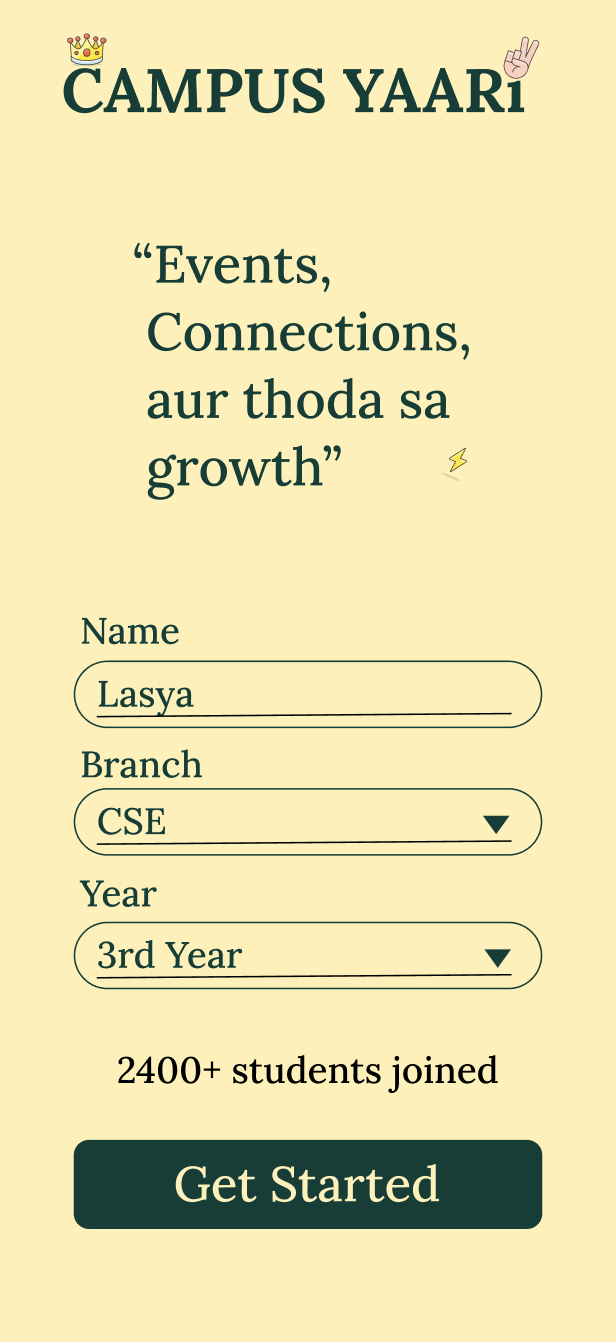
Onboarding
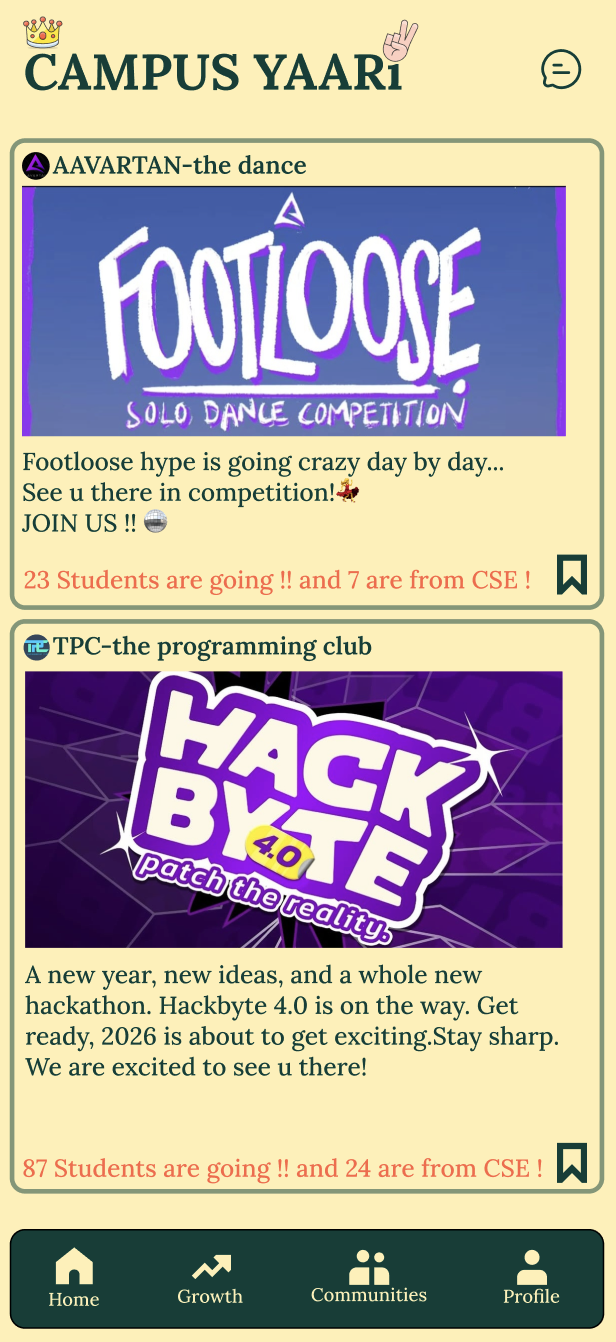
Home Feed
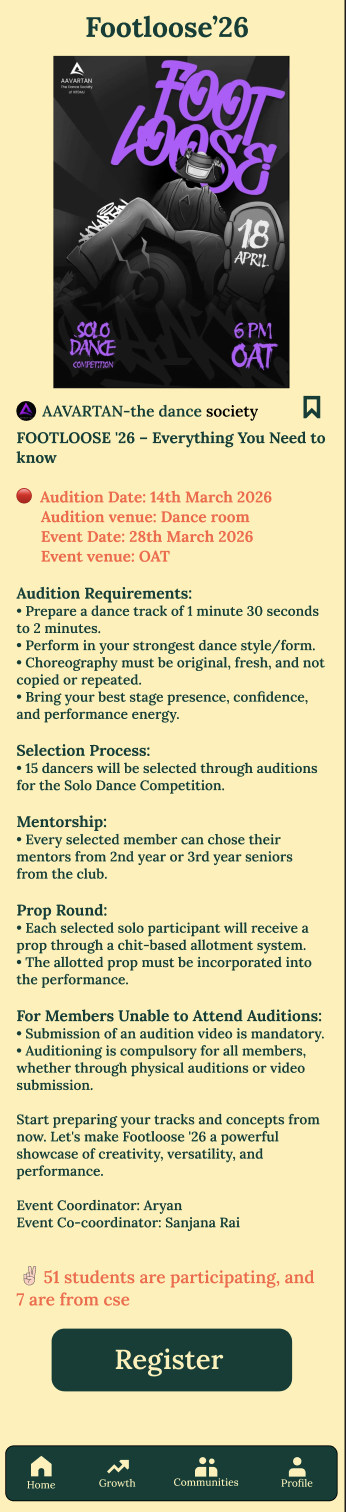
Event Details
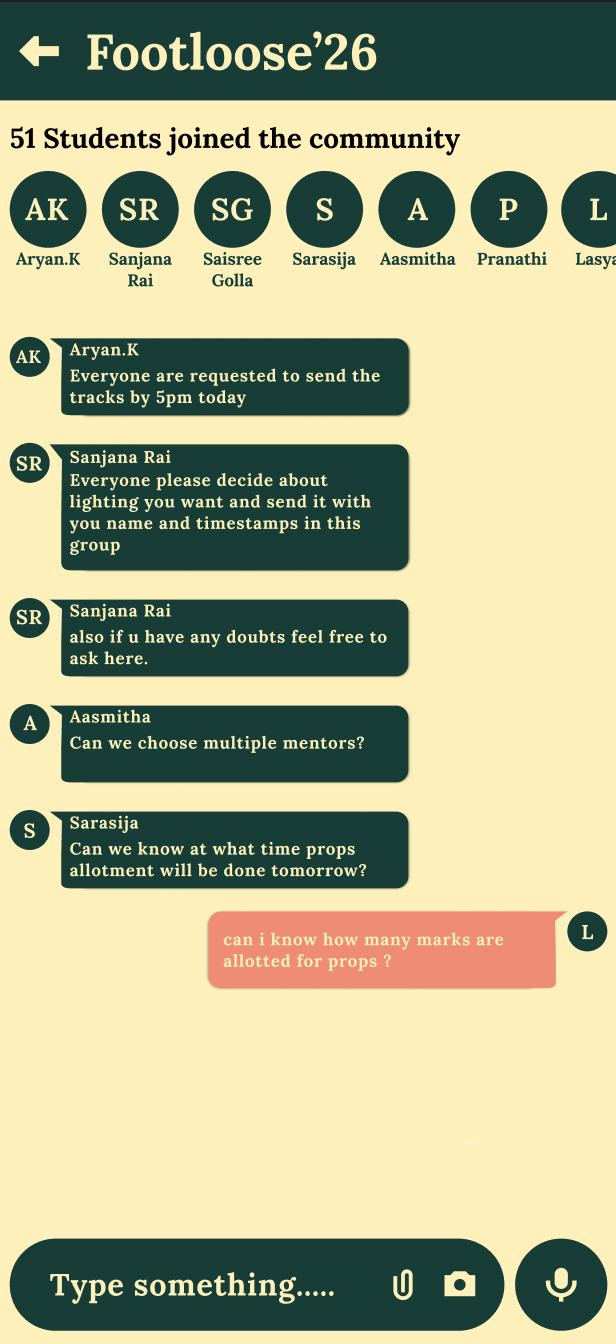
Event Community
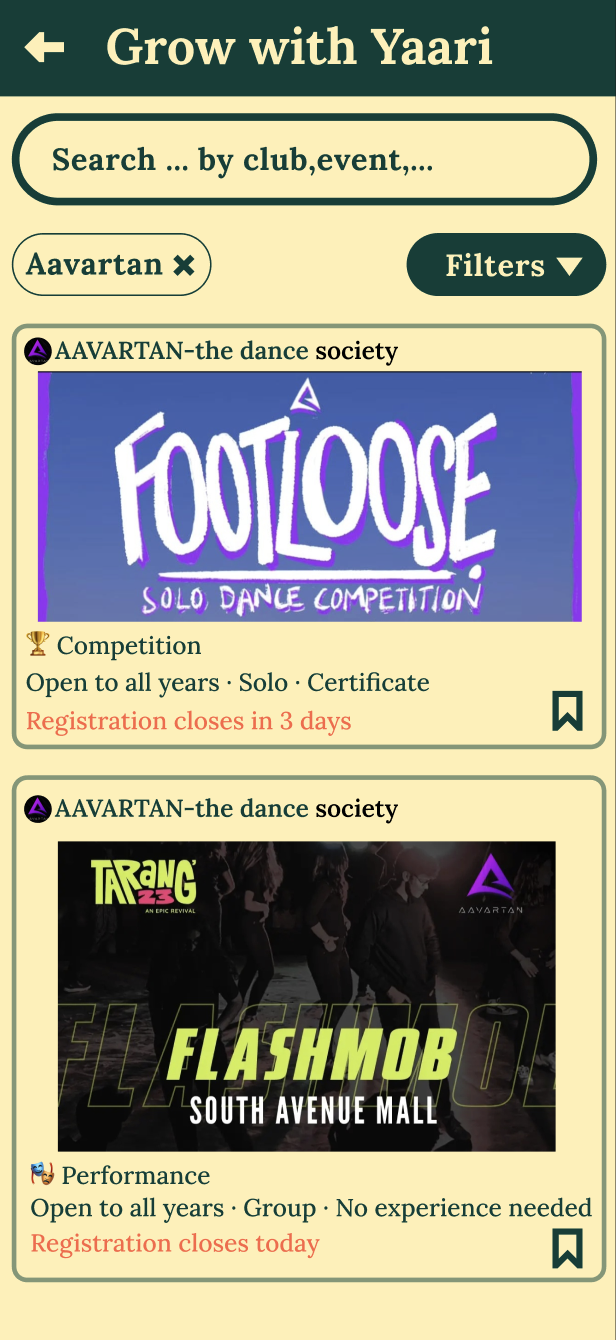
Growth Board
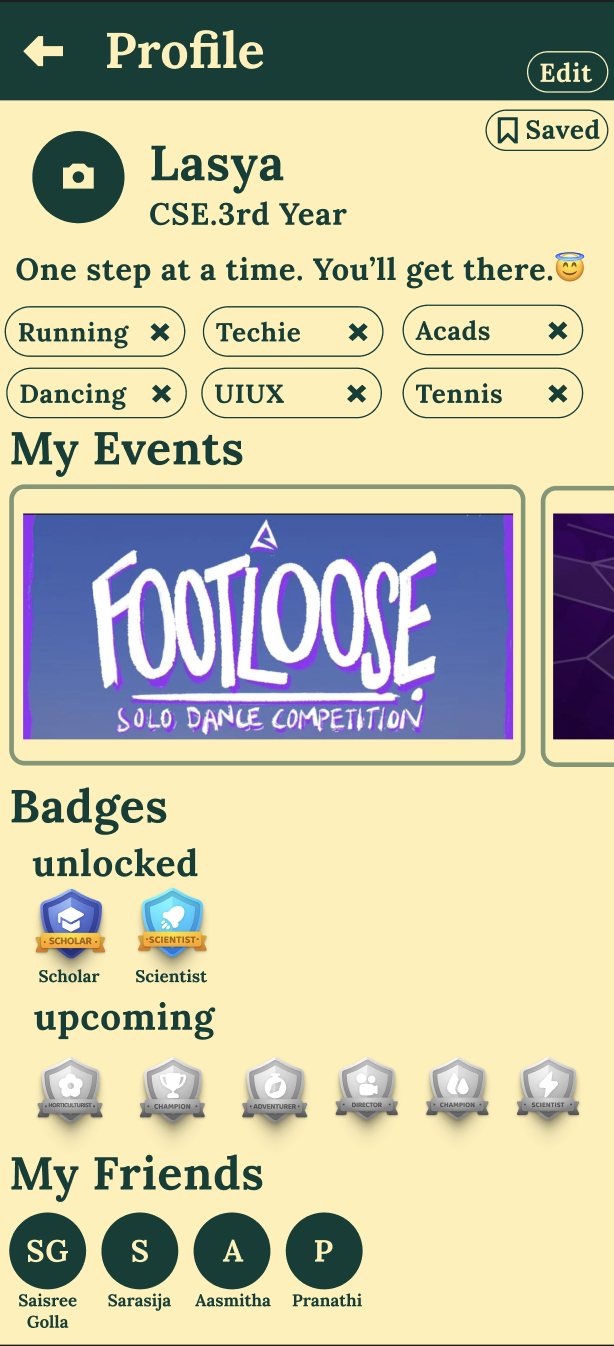
Profile